

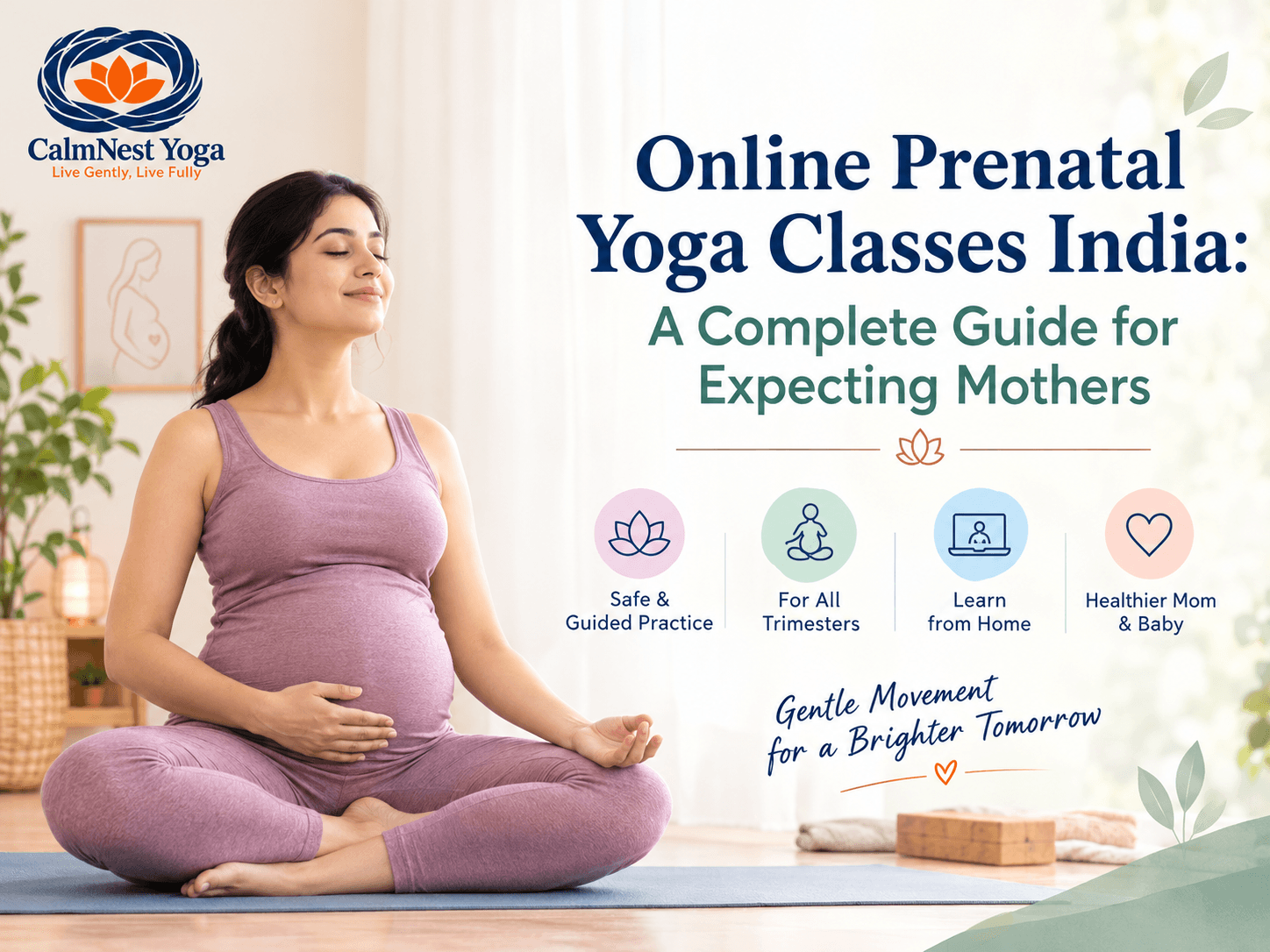
Looking for online prenatal yoga classes in India? Learn how pregnancy-specific yoga works, what to check before joining, and how CalmNest Yoga can help you explore gentle practice from home.
Pregnancy brings a mix of excitement, anticipation, and physical changes that can feel overwhelming at times. Between doctor appointments, work commitments, and preparing for your baby's arrival, finding time for self-care often becomes challenging. Many expecting mothers in India are discovering that online prenatal yoga classes offer a practical solution—a way to stay active, reduce discomfort, and prepare for labour without leaving home.
This guide explains what online prenatal yoga involves, how it differs from general yoga, what benefits you might experience, and how to choose a programme that suits your needs. Whether you are in your first trimester or approaching your due date, understanding your options helps you make an informed decision about your pregnancy wellness routine.
What Is Prenatal Yoga?
Prenatal yoga, sometimes called antenatal yoga or pregnancy yoga, is a modified form of yoga designed specifically for expecting mothers. Unlike regular yoga classes, prenatal sessions account for the physical and hormonal changes that occur during pregnancy . Instructors avoid poses that could compress the abdomen, require lying flat on the back for extended periods, or create balance challenges that increase fall risk.
A typical prenatal yoga session includes gentle stretching, breathing techniques (pranayama), pelvic floor awareness, and relaxation or meditation. The focus is not on achieving advanced poses but on building comfort, strength, and calm during a transformative period .
The practice recognises that every pregnancy is different. A pose that feels comfortable for one woman may be unsuitable for another, depending on her stage of pregnancy, fitness level, and any complications. This is why qualified prenatal instructors emphasise modifications and encourage students to listen to their bodies .
Why Online Prenatal Yoga Classes Have Become Popular in India
Several factors have contributed to the growing interest in online prenatal yoga across India. Access to qualified instructors is one significant advantage. In smaller cities or towns, finding a teacher with specialised prenatal training may be difficult. Online classes connect you with experienced instructors regardless of your location.
Convenience matters too. Pregnancy fatigue, morning sickness, and later-stage physical discomfort can make travelling to a studio feel daunting. Practising from home eliminates travel time and allows you to rest immediately after a session if needed.
Cost can also be a consideration. Online classes often have lower overhead costs than studio-based sessions, which may translate to more affordable pricing. This makes consistent practice more accessible for many families.
Finally, online platforms offer flexibility. Many programmes provide recorded sessions or multiple live time slots, allowing you to fit yoga around your energy levels and other commitments. If you prefer to explore this option further, understanding what to know before starting online prenatal yoga classes can help you prepare.
Benefits of Prenatal Yoga During Pregnancy
Research and practical experience suggest that prenatal yoga, when practised safely, offers several potential benefits for expecting mothers .
Physical Benefits
Reduced back pain and discomfort: As your baby grows, your centre of gravity shifts, often leading to lower back strain and hip discomfort. Gentle yoga stretches target these areas, potentially easing tension. Pregnancy stretches can be particularly helpful for managing these common complaints.
Improved circulation: Pregnancy can cause swelling in the legs and feet due to increased blood volume and pressure on veins. Movement and gentle inversions (with proper support) may help reduce this swelling.
Pelvic floor awareness: Learning to identify and gently engage the pelvic floor muscles prepares you for labour and may support postpartum recovery.
Better sleep: Relaxation techniques and gentle stretching before bed can improve sleep quality, which often becomes disrupted during pregnancy. Prenatal yoga for sleep addresses this specific concern.
Mental and Emotional Benefits
Stress reduction: The combination of breathwork, movement, and mindfulness can lower stress hormones and promote a sense of calm .
Breathing practice for labour: Pranayama techniques like Ujjayi breathing teach you to stay focused and calm during discomfort—a skill directly applicable to labour .
Connection with your baby: Taking time to slow down and focus inward can foster a deeper sense of connection with your growing baby.
Preparation for childbirth: Many prenatal yoga programmes include breathing techniques and positions that may be useful during labour. Exploring prenatal yoga for normal delivery can give you practical tools for this experience.
How Online Prenatal Yoga Classes Work
Online prenatal yoga classes generally follow one of two formats: live interactive sessions or pre-recorded videos. Understanding the difference helps you choose what suits your learning style.
Live interactive classes are conducted in real-time via video conferencing platforms. The instructor demonstrates poses, observes participants (to the extent the platform allows), and offers verbal corrections. You can ask questions and receive guidance tailored to your needs. Some programmes also offer one-on-one sessions for more personalised attention .
Pre-recorded classes allow you to practise at any time. While convenient, they lack real-time feedback. If you are new to yoga or have specific concerns, live sessions with instructor interaction are generally preferable.
Most quality programmes provide modifications for each pose, acknowledging that participants may be at different stages of pregnancy or have varying fitness levels. A responsible instructor will also ask about your health status and any restrictions from your healthcare provider before or at the start of your programme.
Key Considerations for Safe Practice
Safety is paramount when exercising during pregnancy. While prenatal yoga is generally considered low-risk for uncomplicated pregnancies, certain precautions apply.
Consult your healthcare provider first. Before starting any new exercise routine during pregnancy, speak with your doctor, obstetrician, or midwife. They can advise whether yoga is appropriate for your specific situation and whether any modifications are necessary .
Avoid certain poses. After the first trimester, avoid lying flat on your back for extended periods, as this can restrict blood flow . Deep twists, intense backbends, inversions, and poses that put pressure on the abdomen should also be avoided. Hot yoga is not recommended during pregnancy .
Stay hydrated and avoid overheating. Drink water before, during, and after your session. Practise in a cool, well-ventilated space .
Listen to your body. Discomfort during pregnancy yoga is not something to push through. If a pose feels wrong, stop. If you experience dizziness, shortness of breath, bleeding, or contractions, seek medical advice immediately .
Work with qualified instructors. A prenatal yoga instructor should have specific training in pregnancy modifications, contraindications, and safety considerations. General yoga certification alone is not sufficient .
Online vs. Other Prenatal Yoga Formats: A Comparison
Aspect | Online Prenatal Yoga | Offline Prenatal Studio | General Online Yoga |
|---|---|---|---|
Accessibility | Available anywhere with internet | Limited to local area | Available widely |
Convenience | Practise at home; no travel | Requires travel to studio | Practise at home |
Pregnancy-specific instruction | Depends on provider; quality programmes specialise | Typically specialised | Usually not pregnancy-specific |
Schedule flexibility | Often multiple time slots or recorded options | Fixed class times | Varies |
Instructor interaction | Live sessions offer real-time feedback; recorded sessions do not | In-person corrections and hands-on adjustments | Varies; often limited |
Pregnancy modifications | Good programmes provide trimester-specific modifications | Typically provided | Rarely provided |
Cost | Generally moderate | Often higher due to overhead | Lower to moderate |
Suitability for pregnancy | Safe if provider is qualified | Safe if instructor is qualified | Not recommended without prenatal modifications |
This comparison is not a declaration that one format is superior. Each has trade-offs. The best choice depends on your location, schedule, budget, and need for personalised guidance.
How to Choose an Online Prenatal Yoga Programme
With many options available, selecting the right programme requires some evaluation.
Check instructor qualifications. Ask about prenatal-specific training. A qualified instructor should be able to explain pregnancy contraindications, trimester-appropriate modifications, and when to refer you to your doctor .
Look for trimester-specific content. Your body's needs change significantly across the three trimesters. A programme that offers trimester-based prenatal yoga is better positioned to support you safely throughout pregnancy than a one-size-fits-all approach.
Consider the format. Do you prefer live interaction or the flexibility of recorded sessions? Are you comfortable with the technology involved? Some programmes offer a trial class, allowing you to assess the instructor's teaching style before committing.
Assess the pace and intensity. Beginners may find slower, gentler classes more comfortable. If you practised yoga before pregnancy, you might prefer a more active session with appropriate modifications. Prenatal yoga asanas can vary widely in difficulty.
Read reviews or ask for references. Honest feedback from other participants can reveal whether a programme delivers on its promises and whether the instructor creates a supportive environment.
How CalmNest Yoga Supports Expecting Mothers
CalmNest Yoga is an online platform offering prenatal and postnatal yoga classes designed for expecting mothers and new moms in India . The focus is on safe, guided sessions that support physical health, mental well-being, and emotional balance during pregnancy and postpartum recovery.
The programme includes trimester-specific yoga sequences, breathing exercises, meditation, and techniques that may support labour preparation. Sessions are conducted online, allowing participants to practise from home. The approach emphasises personalised guidance and modifications appropriate for each stage of pregnancy.
For those beginning their search, exploring the best pregnancy yoga classes or looking for online prenatal yoga classes in India can provide useful context. A simple guide for pregnancy is also available for those new to the practice. Expecting mothers in Mumbai may find information about pregnancy yoga classes in Mumbai particularly helpful, while those seeking local options can explore prenatal yoga classes near me resources.
The platform positions itself as accessible and beginner-friendly, with support for those who have never practised yoga before as well as those with existing experience.
To learn more about the specific programme structure, visit the prenatal yoga classes page. For questions or to discuss whether the classes suit your needs, the contact page provides a way to reach the team. You can also start by exploring the CalmNest Yoga homepage for an overview of available resources.
When to Start and What to Expect in Each Trimester
Prenatal yoga can be beneficial throughout pregnancy, but the focus shifts as your body changes .
First trimester: Energy levels may fluctuate, and fatigue is common. Gentle poses, breathing awareness, and restorative positions are appropriate. Many women find that first trimester yoga helps manage early pregnancy symptoms and establishes a self-care routine.
Second trimester: Often described as the most comfortable phase, this is a good time to build strength and maintain flexibility. Standing poses, gentle backbends, and hip openers can support posture and prepare the body for the demands of late pregnancy.
Third trimester: Comfort becomes the priority. Supported poses, hip-opening stretches, and breathing exercises dominate. Squats (with support), wide-knee child's pose, and gentle pelvic tilts may help prepare for labour.
Final Thoughts
Online prenatal yoga classes in India offer a practical way for expecting mothers to stay active, manage discomfort, and prepare mentally and physically for childbirth. The key is choosing a programme led by qualified instructors who understand pregnancy-specific safety considerations and can provide appropriate modifications.
Pregnancy is not the time to push your body to its limits. The goal of prenatal yoga is not fitness achievement but comfort, preparation, and calm. With your healthcare provider's approval and a well-designed programme, online prenatal yoga can become a valuable part of your pregnancy journey.
If you are ready to explore what CalmNest Yoga offers, get in touch to discuss your needs or visit the service page to learn more.