

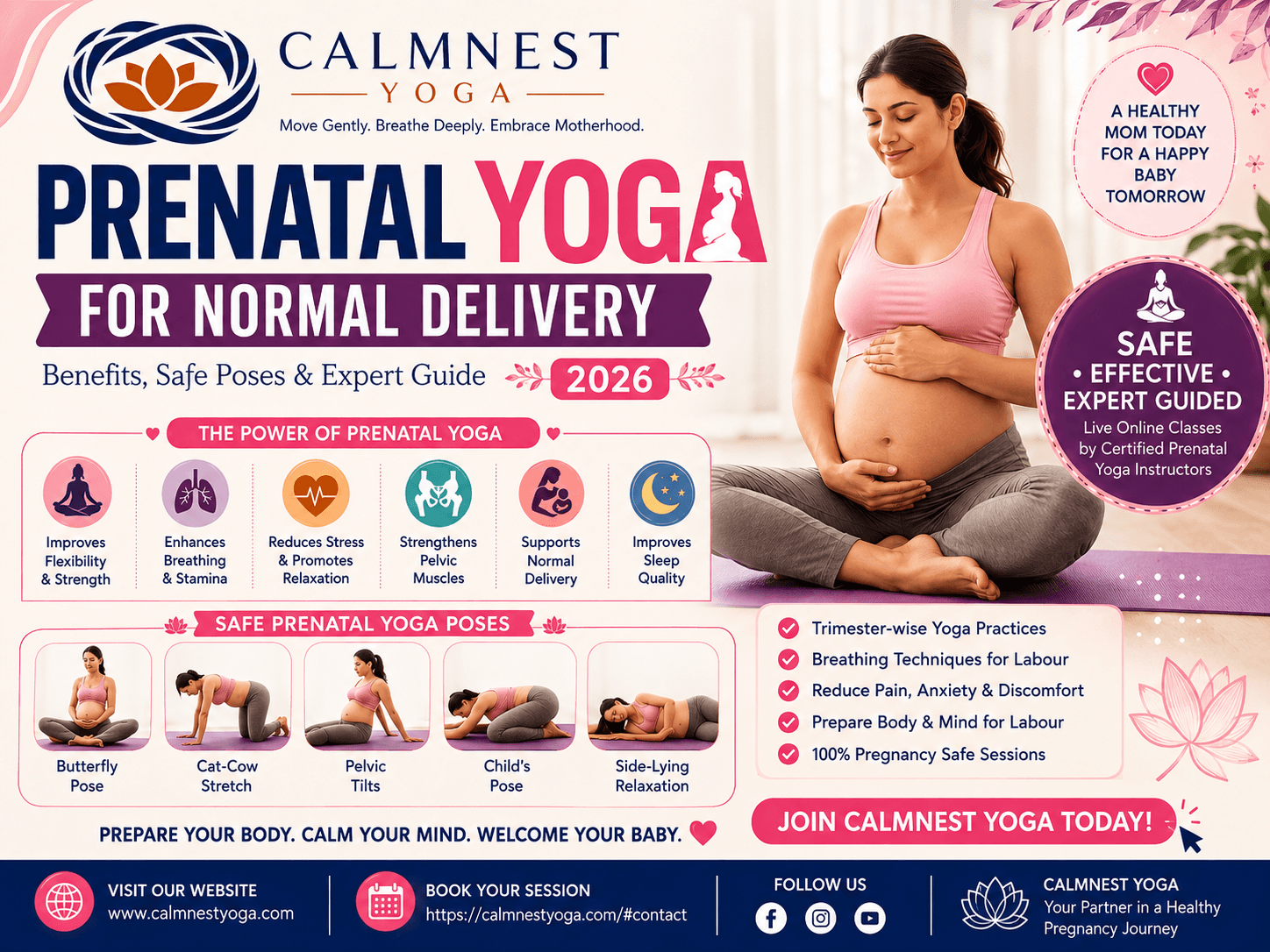
Prepare your body and mind for childbirth with Prenatal Yoga for Normal Delivery at CalmNest Yoga. Discover safe yoga poses, breathing techniques, expert guidance, and trimester-wise online classes to support a healthy pregnancy and labour preparation.
Pregnancy is a transformative journey, one that brings immense joy alongside physical and emotional changes. As you prepare for childbirth, you may be searching for Prenatal Yoga for Normal Delivery—a way to enhance your body's natural capabilities, reduce stress, and build confidence for the labour ahead. While no practice can guarantee a specific birth outcome, a wealth of scientific evidence suggests that prenatal yoga offers significant benefits for both mother and baby. These include improved flexibility, effective pain management, and even a shorter labour.
At CalmNest Yoga, we specialize in guiding expecting mothers through each trimester with safe, expert-led online classes. This comprehensive guide explores how prenatal yoga prepares your body and mind for childbirth, outlines the best poses, and explains the science behind its effectiveness.
What is Prenatal Yoga?
Prenatal yoga is a specialized form of yoga designed to meet the unique needs of pregnant women. Unlike a standard yoga class, it focuses on:
- Safe stretching and strengthening to support your changing body.
- Controlled breathing (pranayama) to manage stress and labour pain.
- Pelvic floor and core conditioning to prepare for delivery.
- Relaxation and mindfulness to build mental resilience.
- Labour preparation techniques to help you feel empowered and in control.
Every pose and practice is modified according to your trimester and individual health conditions, with safety as the top priority .
The Evidence: Can Prenatal Yoga Help with Normal Delivery?
This is one of the most common questions expecting mothers ask. It's important to be clear: while prenatal yoga prepares your body and mind, it cannot promise a normal delivery. The mode of delivery depends on various medical factors, including the baby's position, your health, and obstetric recommendations.
However, the scientific evidence is compelling. A significant body of research shows that Prenatal Yoga for Normal Delivery is a powerful tool that supports the process.
Scientific Benefits of Prenatal Yoga for Labour
Here’s what recent research reveals about the impact of yoga on birth outcomes:
- Increases Chances of Spontaneous Vaginal Birth: A meta-analysis of 14 randomized controlled trials found that women who practiced prenatal yoga had a significantly lower rate of cesarean sections compared to those who received standard care . Another systematic review found that yoga interventions increased the odds of normal vaginal birth by 158% (OR 2.58) .
- Shortens the First Stage of Labour: Several studies suggest that regular yoga practice can reduce the duration of the first stage of labour by two to three hours . This can make a significant difference in the overall birth experience.
- Improves Pain Management: Research indicates that women who practice prenatal yoga have a better tolerance for pain during labour and require less analgesia .
- Reduces Perineal Lacerations and Episiotomies: Some studies show that yoga may contribute to a lower rate of perineal tears and episiotomies, particularly in specific populations .
- Reduces Stress, Anxiety, and Depression: The combination of physical postures, deep breathing, and meditation is highly effective in reducing psychological distress during pregnancy .
- Supports a Healthier Pregnancy: Yoga can help improve sleep, reduce pregnancy-related back pain, improve blood circulation, and help manage gestational weight gain .
“The evidence highlights positive effects of pregnancy yoga on anxiety, depression, perceived stress, mode of birth and duration of labour.”
8 Key Benefits of Prenatal Yoga for Normal Delivery
Let's delve deeper into how prenatal yoga specifically aids in preparing for a normal vaginal delivery.
1. Improves Pelvic Flexibility
Gentle stretches, such as the Butterfly Pose (Baddha Konasana), help open the hips and increase flexibility in the pelvic floor muscles. This is crucial for allowing the baby to descend into the birth canal and for the pelvis to open during delivery .
2. Strengthens Pelvic Floor Muscles
A strong pelvic floor is essential for supporting the growing baby and controlling the muscles used during pushing. Exercises like Kegels are often taught in prenatal yoga to improve strength, bladder control, and prevent prolapse . However, it is equally important to learn how to relax the pelvic floor, as a tense muscle can impede labour .
3. Builds Core Muscle Endurance
Modified core exercises help maintain strength in the abdominal and back muscles, which support your baby and improve posture. This can alleviate back pain and help you manage the physical demands of carrying a pregnancy to term .
4. Promotes Better Breathing During Labour
Breathing exercises, or pranayama, are a cornerstone of prenatal yoga. Techniques like deep diaphragmatic breathing and Ujjayi breath help reduce panic, improve oxygen flow to the baby, and provide a natural coping mechanism for labour pains .
5. Reduces Pregnancy Back Pain
By improving posture and spinal alignment through poses like Cat-Cow, prenatal yoga helps relieve the back pain that is common in later pregnancy .
6. Reduces Anxiety and Promotes Relaxation
The mindfulness and meditation components of a yoga class calm the nervous system, reducing cortisol levels and promoting a sense of well-being. This mental preparation is key for approaching labour with confidence .
7. Improves Blood Circulation
Gentle movements and specific poses improve blood flow to the uterus and placenta, which can reduce swelling in the legs and feet.
8. Increases Body Awareness
A regular practice helps you tune into your body's signals, learning to differentiate between tension and relaxation. This awareness can be invaluable during labour.
Safe Prenatal Yoga Poses for Normal Delivery
Practicing yoga safely during pregnancy is paramount. Always listen to your body and avoid pushing yourself into discomfort. These poses are best learned under the guidance of a certified prenatal yoga instructor.
Here are some of the most recommended and effective poses:
Pose Name | Benefits | How to Practice Safely |
|---|---|---|
Butterfly Pose (Baddha Konasana) | Opens hips and improves pelvic flexibility . | Sit on the floor, bring the soles of your feet together, and let your knees drop to the sides. Gently press down on your knees to feel a stretch in the inner thighs. Avoid over-stretching. |
Cat-Cow Stretch | Reduces back pain, improves spinal mobility, and can help position the baby . | Start on your hands and knees. Inhale, drop your belly and lift your head (Cow). Exhale, round your spine and tuck your chin (Cat). Move slowly with your breath. |
Pelvic Tilts | Strengthens the lower back and improves pelvic mobility . | Stand with your back against a wall or get on your hands and knees. Tilt your pelvis forward (flattening the lower back) and then backward. This helps relieve backache and encourages the baby into a good position. |
Deep Squats (Supported) | Opens the pelvic outlet and aligns the birth canal, mimicking an ideal birthing position . | Stand with feet wider than hip-width. Hold onto a sturdy chair or wall for balance. Inhale and lower your bottom toward the floor. Hold for a few breaths. |
Child’s Pose (Modified) | A deeply relaxing, gentle hip stretch that helps calm the mind and reduce stress . | Start on your hands and knees. Move your knees wider than hip-width to make room for your belly. Lower your hips back toward your heels, extending your arms forward. |
Side-Lying Relaxation (Savasana Variation) | Promotes circulation and deep relaxation without lying on your back . | Lie on your left side to improve blood flow to the baby. Bend your knees slightly and support your head, belly, and knees with pillows. |
Poses to Avoid
- Deep Twists: Avoid poses that compress the abdomen.
- Inversions: Poses where the head is below the heart can increase fall risk .
- Lying on Your Belly: This is unsafe after the first trimester.
- Lying Flat on Your Back: After 16 weeks, this can reduce blood flow to the baby and cause dizziness .
- Hot Yoga: Poses practiced in a heated room can cause overheating and are unsafe during pregnancy .
Breathing Exercises for Labour
Breathing is your most powerful tool during labour. Here are a few techniques to practice:
- Deep Diaphragmatic Breathing: Inhale deeply through your nose, allowing your belly to rise. Exhale slowly through your nose or mouth, feeling your belly fall. This promotes relaxation.
- Ujjayi Breath (Victorious Breath): Gently constrict the back of your throat to create a soft "ocean" sound with your breath. This helps focus the mind and manage intensity.
- Dirga Pranayama (Three-Part Breath): Focus on breathing into your belly, ribs, and chest in succession. This deepens breath awareness and calms the nervous system.
When to Start and Who Should Avoid
- When to Start: Most women are cleared to begin prenatal yoga after the first trimester, between 13–28 weeks . However, you can start earlier if you're comfortable and have doctor approval.
- Who Should Avoid: Consult your healthcare provider before beginning any exercise. Avoid yoga if you have placenta previa, severe hypertension, preterm labour risk, heavy bleeding, or cervical insufficiency, or other severe medical complications .
Why Choose Online Prenatal Yoga Classes?
Online classes offer unparalleled convenience and safety for expecting mothers. They allow you to:
- Learn safely from home.
- Access expert guidance from certified instructors.
- Follow trimester-specific routines that suit your changing body.
- Build a consistent practice that prepares you for labour.
- Access recorded sessions to practice at your own pace.
- Save time and travel energy.
Why Choose CalmNest Yoga?
CalmNest Yoga is your dedicated partner for a healthier, calmer, and more confident pregnancy journey. We offer:
- Certified Prenatal Yoga Instructors with expertise in maternal health.
- Live Online Sessions for real-time guidance and support.
- Trimester-Wise Classes that evolve with your body's needs.
- Comprehensive Programmes including breathing exercises, meditation, and pregnancy-safe modifications.
- Personalized Guidance to ensure a safe and effective practice.
Explore our full range of Prenatal Yoga Classes: https://calmnestyoga.com/prenatal-yoga-classes
Book a Free Consultation: https://calmnestyoga.com/#contact
Visit our Main Website: https://calmnestyoga.com/
Internal Links
- Explore Our Prenatal Yoga Classes: https://calmnestyoga.com/prenatal-yoga-classes
- Read: Managing Swollen Hands and Feet in the Third Trimester
- Read: Is it Safe to Have Sex in the Third Trimester?
- Learn About: Maternity Leave Law in India
- Contact Us: https://calmnestyoga.com/#contact
Recommended External Links
- World Health Organization – Physical Activity During Pregnancy: https://www.who.int/
- American College of Obstetricians and Gynecologists (ACOG) – Exercise During Pregnancy: https://www.acog.org/
- Mayo Clinic – Prenatal Yoga: https://www.mayoclinic.org/
- PubMed – Prenatal Yoga Meta-analysis: https://pubmed.ncbi.nlm.nih.gov/32379685/
- National Center for Complementary and Integrative Health (NCCIH) – Yoga and Pregnancy: https://www.nccih.nih.gov/
Conclusion
Incorporating Prenatal Yoga for Normal Delivery into your pregnancy routine is one of the most effective steps you can take to prepare your body and mind for childbirth. While it cannot promise a specific outcome, the evidence clearly shows that consistent practice can reduce stress, enhance physical flexibility, strengthen key muscles, and potentially shorten labour. It empowers you with breathing techniques and a sense of calm that can transform your birthing experience. Join CalmNest Yoga today to embark on a safe, supportive, and transformative pregnancy journey.