
Learn how prenatal yoga for anxiety may help expecting mothers relax through gentle movement, mindful breathing, and supported poses, along with practical pregnancy safety tips.
Pregnancy can bring happiness, anticipation, and new experiences, but it can also bring worries about childbirth, health, and becoming a parent. Prenatal yoga for anxiety combines gentle movement, mindful breathing, and relaxation to help expecting mothers manage everyday stress and feel more grounded.
Although yoga may support emotional well-being, it is not a replacement for professional mental health care. With appropriate guidance and pregnancy-safe modifications, it can become one part of a balanced prenatal wellness routine.
Can Prenatal Yoga Help With Anxiety During Pregnancy?
Yes, prenatal yoga may help some pregnant women manage stress and anxiety. It encourages mindful breathing, gentle physical activity, body awareness, and relaxation. Research reviewed by the US National Center for Complementary and Integrative Health suggests that pregnancy yoga may reduce anxiety, stress, and depressive symptoms, although more research is needed.
Every pregnancy is different, so results vary. Yoga should complement, rather than replace, medical care when anxiety becomes persistent or overwhelming.
How Does Prenatal Yoga Support Emotional Well-Being?
1. Encourages Mindful Breathing
Slow, comfortable breathing can help you pause when worries arise. Paying attention to each breath may make it easier to return your focus to the present moment.
2. Releases Everyday Physical Tension
Gentle stretches can help ease muscular tightness around the shoulders, back, and hips. Moving comfortably may also help you feel more connected to your changing body.
3. Creates a Relaxation Routine
Setting aside a few minutes for mindful movement can create a regular self-care habit. A calming routine before bedtime may help you unwind, although it cannot guarantee better sleep.
4. Builds Awareness of Your Body
Pregnancy brings physical and emotional changes. Gentle yoga encourages you to notice your comfort levels, respect your limits, and avoid pushing through discomfort.
Four Gentle Prenatal Yoga Practices for Anxiety
Try the following options only after your healthcare professional confirms that prenatal exercise is appropriate for you.
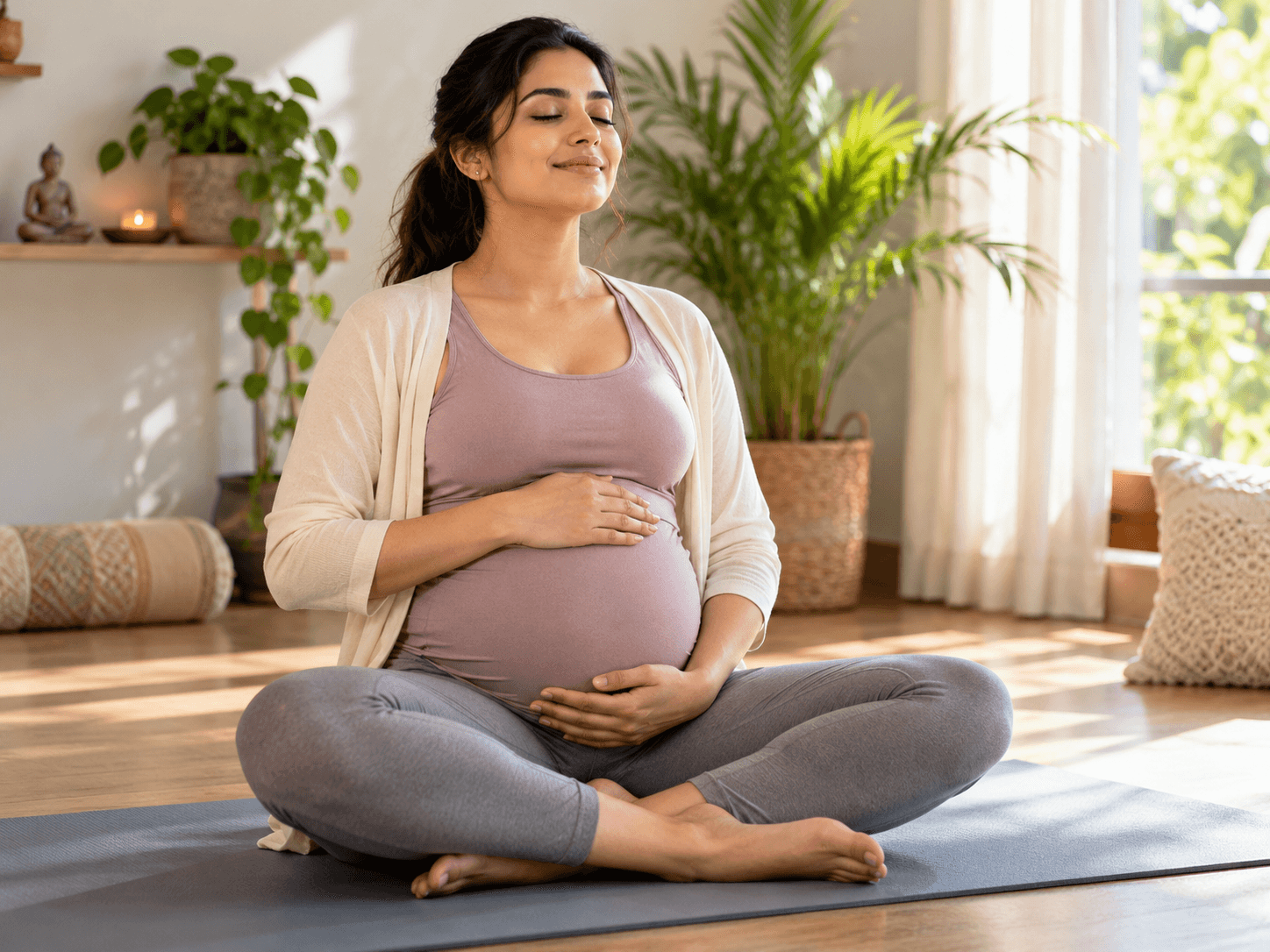
1. Comfortable Seated Breathing
Sit on a firm cushion or chair with your back comfortably supported.
- Relax your shoulders and jaw.
- Breathe naturally through your nose if comfortable.
- Allow your abdomen to expand gently as you inhale.
- Exhale slowly without forcing your breath.
- Continue for one to three minutes.
Avoid breath-holding, forceful breathing, or any technique that causes dizziness.
2. Supported Butterfly Pose
Sit upright with the soles of your feet together and your knees resting comfortably outward. Place cushions under your thighs if needed.
Keep your spine relaxed and breathe naturally. Do not push your knees toward the floor or force a deep stretch.
3. Gentle Cat-Cow Movement
If getting onto your hands and knees is comfortable and approved for your pregnancy, position your hands beneath your shoulders and knees beneath your hips.
Slowly round your back as you exhale, then return to a comfortable neutral position as you inhale. Move gently without straining your neck or lower back.
4. Side-Lying Relaxation
Lie on your side with pillows supporting your head, belly, and knees as needed. Let your arms rest comfortably and observe your natural breathing.
Remain in this position for a few minutes if comfortable. Change position if you experience pain, breathlessness, dizziness, or discomfort.
A Simple 5–10 Minute Prenatal Relaxation Routine
You do not need an elaborate yoga sequence to begin building a calming habit.
- Minute 1–2: Sit comfortably and notice your natural breathing.
- Minute 3–4: Practise gentle, supported butterfly movements if comfortable.
- Minute 5–7: Try a few slow cat-cow movements, if suitable for you.
- Minute 8–10: Rest in a supported seated or side-lying position.
Treat this as an optional example, not a medically prescribed routine. Shorten it, modify it, or stop whenever needed.
How to Practise Prenatal Yoga Safely
Before starting or changing your exercise routine, consult your obstetrician or qualified maternity healthcare professional, particularly if you have pregnancy complications or have been advised to limit activity.
Keep these precautions in mind:
- Choose a qualified instructor experienced in prenatal yoga.
- Use cushions, blocks, or a sturdy chair for support.
- Avoid hot yoga, overheating, and movements that risk falling.
- Avoid prolonged periods lying flat on your back, particularly later in pregnancy.
- Skip deep twists, forceful stretches, and poses that compress your abdomen.
- Stay hydrated and practise in a comfortable environment.
- Stop if you experience pain, dizziness, vaginal bleeding, fluid leakage, chest pain, or unusual shortness of breath. Seek prompt medical advice for concerning symptoms.
For further guidance, consult the ACOG recommendations on exercise during pregnancy.
When Should You Seek Help for Pregnancy Anxiety?
Occasional worries can happen during pregnancy, but persistent anxiety deserves attention. Speak with your obstetrician or a mental health professional if worry interferes with sleep, daily activities, relationships, or your ability to enjoy everyday life.
Psychotherapy and, when appropriate, medication can help manage anxiety during pregnancy. Your healthcare team can discuss suitable options with you. You do not need to wait until symptoms become severe to ask for support.
Explore Online Prenatal Yoga With CalmNest Yoga
Practising from home may make it easier to build a consistent wellness routine around your schedule. CalmNest Yoga offers resources for expecting mothers who want gentle, guided pregnancy wellness support.
Explore our prenatal yoga classes to learn more about available sessions. You can also read our guide to trimester-based prenatal yoga for information about adapting practice as pregnancy progresses.
For questions about available options, contact CalmNest Yoga. Visit our homepage to explore additional pregnancy wellness resources.
Final Thoughts: Make Space for Calm During Pregnancy
Prenatal yoga for anxiety may offer a gentle way to practise mindful breathing, comfortable movement, and relaxation during pregnancy. Start with manageable steps, choose pregnancy-appropriate modifications, and listen to your body's signals.
Most importantly, remember that you do not have to manage persistent anxiety alone. Combine suitable self-care practices with professional support whenever you need it.