

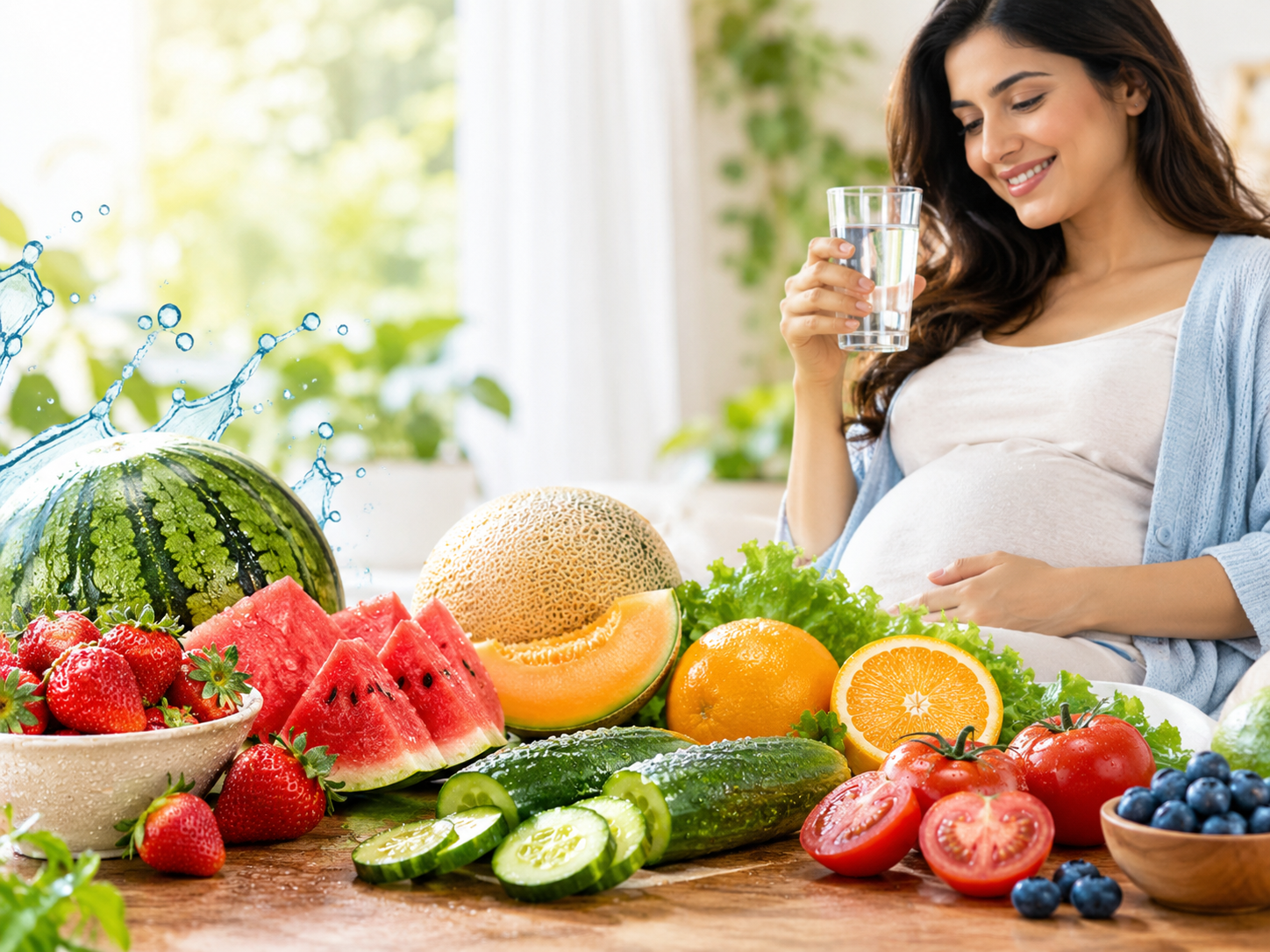
Discover 12 water-rich foods for pregnancy that help support hydration during summer. From juicy watermelon to refreshing cucumber, explore healthy food choices, essential benefits, and simple tips to stay hydrated throughout pregnancy.
Pregnancy brings many changes to your body, and staying hydrated is an important part of looking after yourself. Between morning sickness, changing appetite, warm weather, and frequent bathroom visits, drinking enough water can sometimes feel difficult. The good news is that you can also get fluids from everyday foods.
Water rich foods for pregnancy include fruits, vegetables, and other nutritious foods that provide water alongside vitamins, minerals, and fibre. Watermelon, cucumber, oranges, strawberries, tomatoes, and curd are practical options to include in a balanced pregnancy diet.
However, these foods should complement regular water intake rather than replace it. A varied diet, safe food preparation, and appropriate prenatal care remain essential throughout pregnancy.
In this guide, you will discover 12 hydrating food choices, simple ways to enjoy them, and practical tips for maintaining healthy hydration.
Why Is Hydration Important During Pregnancy?
Your body needs sufficient fluids to support several normal functions during pregnancy. Water helps maintain blood volume, supports digestion, carries nutrients, and contributes to the formation of amniotic fluid around your developing baby.
Getting enough fluids can also help prevent dehydration-related problems such as headaches, dizziness, and constipation.
Hydration becomes especially important during hot Indian summers, when sweating can increase fluid loss. However, your needs may also change with physical activity, illness, vomiting, and your individual health conditions.
According to the American College of Obstetricians and Gynecologists (ACOG), pregnant women should generally aim for 8–12 cups of water daily. Your healthcare provider may recommend a different amount depending on your circumstances.
12 Water Rich Foods for Pregnancy
The following foods can help you add fluids and useful nutrients to your daily meals. Choose fresh, properly washed produce and pasteurized dairy products where applicable.
1. Watermelon
Watermelon is one of the most convenient fruits for hydration because it contains a high proportion of water. Its naturally sweet taste also makes it an appealing snack when your appetite changes during pregnancy.
It provides vitamin C and other nutrients, although it should not be considered a substitute for a balanced meal.
How to eat it: Enjoy a bowl of freshly cut watermelon as a mid-morning snack or alongside breakfast.
Helpful tip: Wash the outer surface before cutting, use clean utensils, and refrigerate cut fruit promptly.
2. Cucumber
Cucumber contains plenty of water and offers a refreshing crunch. It is also a simple addition to meals when you want something light without preparing a complicated recipe.
Although cucumber is not particularly rich in every essential nutrient, it contributes to your overall fluid intake.
How to eat it: Add cucumber to a freshly prepared salad, serve it with a meal, or combine it with curd for a simple raita.
Wash it thoroughly under clean running water before eating or cutting.
3. Oranges and Sweet Lime
Oranges and sweet lime, commonly called mosambi in India, provide water along with vitamin C. Vitamin C supports normal immune function and helps your body absorb iron from plant-based foods.
These fruits can be particularly useful when you want a refreshing snack with a naturally sweet and tangy flavour.
How to eat them: Eat a whole orange or peeled sweet lime between meals. Whole fruit generally provides more fibre than juice.
If citrus fruits worsen your heartburn, choose another fruit that feels comfortable.
4. Strawberries
Strawberries contain a high percentage of water and provide vitamin C, fibre, and other beneficial plant compounds.
Their sweet flavour makes them easy to combine with other nutritious foods without needing added sugar.
How to eat them: Add thoroughly washed strawberries to oatmeal, plain pasteurized yoghurt, or a homemade fruit bowl.
Choose fresh strawberries without visible mould or spoilage, and wash them before eating.
5. Muskmelon
Muskmelon is a useful seasonal fruit for people looking for hydrating foods during pregnancy. It supplies water and nutrients, including vitamin C and carotenoids, depending on the variety.
Its soft texture can also make it an enjoyable snack when you prefer something light.
How to eat it: Serve freshly cut muskmelon with breakfast or enjoy a small bowl between meals.
Because melons can become contaminated during preparation, wash the outer rind before cutting and keep the cut fruit refrigerated.
6. Tomatoes
Tomatoes contribute water, vitamin C, and lycopene, a naturally occurring antioxidant compound.
They are also versatile enough to fit into Indian meals throughout the year. You do not need to eat them separately to benefit from their water content.
How to eat them: Add tomatoes to cooked vegetables, dal, homemade soups, or freshly prepared salads.
If raw tomatoes trigger acidity, try eating them cooked instead.
7. Lettuce and Other Leafy Greens
Lettuce contains substantial water, while leafy vegetables such as spinach also supply folate and other important nutrients.
Folate is especially important during pregnancy because it supports normal development of the baby's neural tube. However, leafy greens alone cannot replace recommended folic acid supplements.
How to eat them: Include thoroughly washed lettuce in salads or add cooked spinach to dal, vegetables, and other balanced meals.
Wash leafy greens carefully and avoid produce that appears spoiled or has been stored improperly.
8. Pineapple
Pineapple contains water, vitamin C, and carbohydrates that provide energy. Its juicy texture makes it another option for varying your fruit intake during pregnancy.
There is no need to avoid ordinary food portions of ripe pineapple solely because you are pregnant. However, individual tolerance and medical advice still matter.
How to eat it: Enjoy a small bowl of freshly prepared pineapple or combine it with other washed fruits.
Avoid relying on pineapple or any other single food to manage pregnancy symptoms or influence labour.
9. Pears
Pears provide water and dietary fibre, making them a useful choice for a varied pregnancy diet.
Fibre supports normal bowel movements, while adequate fluid intake helps fibre work effectively. This combination may be useful if you experience occasional pregnancy-related constipation.
How to eat them: Eat a washed pear as a snack, slice it into oatmeal, or combine it with pasteurized yoghurt.
Keep the skin on if you prefer extra fibre and the fruit has been cleaned properly.
10. Peaches
Peaches contain water and provide nutrients such as vitamin C. Fresh peaches can add variety to your fruit intake, especially when they are in season.
Their mild sweetness also makes them suitable for a simple snack without requiring added sugar.
How to eat them: Wash thoroughly, remove the stone, and enjoy the fruit sliced or mixed into a fruit bowl.
Fresh, properly handled fruit is generally preferable to fruit products containing large amounts of added sugar.
11. Curd and Plain Yoghurt
Plain curd and yoghurt contain water and can contribute to your overall fluid intake. They also provide protein and calcium, nutrients that support maternal health and your baby's growth.
Calcium is important for developing bones and teeth, while protein contributes to the growth of body tissues.
How to eat them: Have a bowl of plain curd with lunch, prepare raita, or combine pasteurized yoghurt with fresh fruit.
Choose products made with pasteurized milk and stored at a safe temperature. Avoid unpasteurized dairy products during pregnancy.
12. Vegetable Soups
Homemade vegetable soup is a practical way to combine fluids with a variety of vegetables. Depending on the ingredients, it can provide vitamins, minerals, and fibre.
Soup may be particularly appealing when you do not feel like eating a large meal, although it should not replace balanced meals regularly.
How to prepare it: Cook carrots, tomatoes, pumpkin, or other vegetables in water or suitable broth until thoroughly cooked. Blend them if you prefer a smooth texture.
Limit excessive salt and avoid leaving prepared soup at room temperature for extended periods.
How to Include Hydrating Foods in Your Daily Pregnancy Diet
You do not need to eat all 12 foods every day. A more practical approach is to rotate different fruits and vegetables according to availability, appetite, and your nutritional needs.
Here is an example of how you could incorporate them into a typical day:
Time | Simple food idea |
|---|---|
Breakfast | Oatmeal with strawberries or pear |
Mid-morning | A bowl of watermelon or muskmelon |
Lunch | Dal, cooked vegetables, cucumber, and curd |
Afternoon snack | Orange or sweet lime |
Dinner | Balanced meal with cooked leafy greens or vegetable soup |
Throughout the day | Regular servings of drinking water |
This is an example, not a prescribed pregnancy meal plan. Portion sizes and food choices should reflect your appetite, medical history, and any dietary guidance provided by your healthcare professional.
For more pregnancy-related movement and wellbeing information, explore CalmNest Yoga's prenatal yoga classes. Gentle movement may complement a healthy routine when your pregnancy care provider confirms that exercise is appropriate for you.
Practical Tips to Stay Hydrated During Pregnancy
Eating water-rich foods is helpful, but regular fluid intake remains important.
- Drink throughout the day: Keep water accessible and take regular sips instead of waiting until you feel very thirsty.
- Carry a water bottle: This can make it easier to monitor your drinking habits when travelling or working.
- Choose whole fruit: Whole fruit generally provides more fibre than juice and does not require added sugar.
- Increase fluids when appropriate: Hot weather, sweating, and certain illnesses can increase your fluid needs.
- Pay attention to your urine: Pale-yellow urine can be a useful general indicator of hydration, although it is not a definitive medical test.
- Handle food safely: Wash produce, use clean utensils, refrigerate perishable foods, and choose pasteurized dairy products.
- Consider your medical needs: Gestational diabetes, kidney or heart conditions, persistent vomiting, and other complications may require individualised dietary or fluid guidance.
Do not assume that drinking excessive amounts of water or eating particular fruits will prevent pregnancy complications. If your healthcare provider has prescribed a fluid restriction or a specific diet, follow that advice.
Signs You May Not Be Getting Enough Fluids
Dehydration can occur when you lose more fluid than you replace. Possible signs include:
- Darker-than-usual urine or passing urine less frequently.
- Unusual thirst or a dry mouth.
- Headaches, tiredness, or dizziness.
- Difficulty keeping fluids down during repeated vomiting.
Contact your healthcare provider promptly if you suspect dehydration. Seek urgent medical assessment if you experience fainting, confusion, severe weakness, very little urine, or persistent vomiting that prevents you from keeping fluids down.
Do not rely on fruit or home remedies alone when symptoms are significant.
A Balanced Approach to Pregnancy Hydration
The best approach combines regular drinking water with a varied diet that includes fruits, vegetables, protein sources, whole grains, and suitable dairy or fortified alternatives.
Watermelon, cucumber, oranges, strawberries, muskmelon, tomatoes, pears, and vegetable soups can all contribute to hydration. Curd and other nutritious foods add variety and provide additional nutrients.
Remember that no single food meets every pregnancy requirement. Your nutritional needs may also change as pregnancy progresses, so personalised advice is valuable when you have concerns about your diet or fluid intake.
For questions about prenatal wellbeing or suitable movement practices, you can contact CalmNest Yoga or visit the CalmNest Yoga website to learn more about its services.