

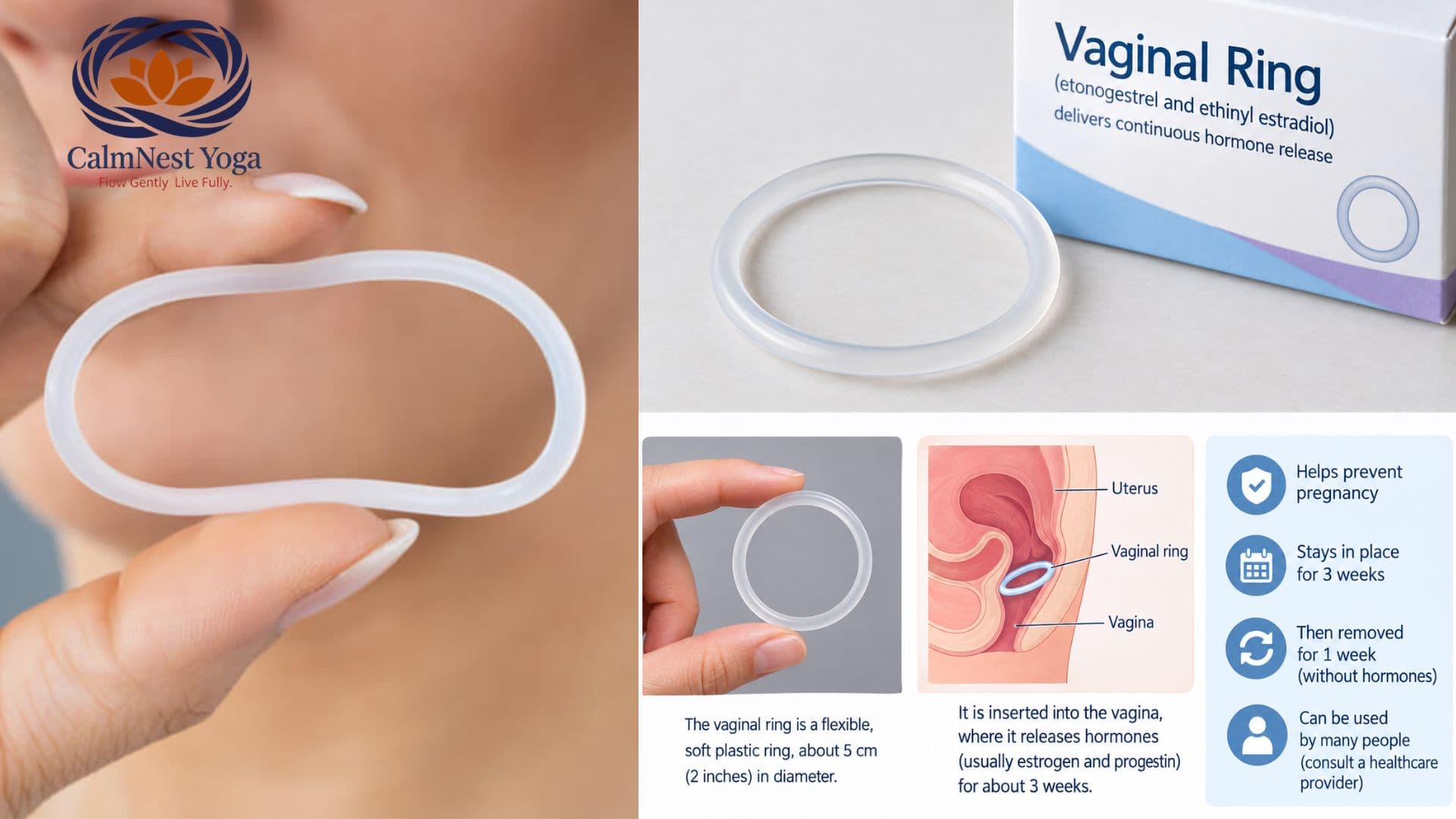
The vaginal ring can be an effective and convenient option for people seeking reversible hormonal contraception without a daily pill routine.
Choosing a contraceptive method is a personal decision. Some people prefer a daily pill, while others want a method that works over several weeks without requiring a daily routine. The vaginal ring is one option that may suit people who want reversible hormonal contraception without taking a pill every day.
Although the vaginal ring has been used as a contraceptive method for years, many people still have questions about how it works, how to insert it, how long it can remain in the vagina, and whether it affects periods, fertility or sexual activity.
Searches for terms such as vaginal ring contraceptive and pussy ring can also lead to information about different products, so it is important to understand the distinction between a medical contraceptive device and a ring designed for sexual pleasure.
This guide explains what a vaginal ring is, how it prevents pregnancy, its effectiveness, recommended usage duration, potential side effects, safety considerations and when to seek medical advice.
Medical note: This article focuses primarily on the hormonal contraceptive vaginal ring. Different brands and ring designs have different instructions, so always follow the product leaflet and advice from a qualified healthcare professional.
What Is a Vaginal Ring?
A vaginal ring is a small, flexible ring designed to be inserted into the vagina. A hormonal contraceptive vaginal ring releases hormones that help prevent pregnancy.
The ring is generally made from soft, flexible polymer material. Once inserted, it remains inside the vagina for a specified period, releasing hormones that are absorbed through the vaginal lining into the bloodstream.
Most commonly used hormonal contraceptive rings contain a combination of oestrogen and progestogen. These hormones work together to prevent ovulation and make pregnancy less likely.
The vaginal ring is a form of reversible hormonal contraception. It does not permanently affect fertility, and fertility generally returns after discontinuation.
A contraceptive vaginal ring is different from a vaginal support ring, a pelvic organ prolapse device or a ring intended for sexual stimulation. These products have different purposes and must not be used interchangeably.
How Does a Vaginal Ring Work?
The vaginal ring prevents pregnancy primarily through the action of the hormones it releases.
1. It prevents ovulation
Ovulation is the process in which an ovary releases an egg during the menstrual cycle.
The hormones in a combined contraceptive vaginal ring suppress the hormonal signals that normally trigger ovulation. Without the release of an egg, fertilisation cannot occur through the usual process.
Preventing ovulation is the principal way the combined hormonal vaginal ring works.
2. It thickens cervical mucus
Cervical mucus is the fluid produced by the cervix, the lower part of the uterus.
Progestogen changes this mucus, making it thicker and more difficult for sperm to pass through the cervix.
This provides an additional contraceptive effect.
3. It changes the uterine lining
The hormones also affect the lining of the uterus.
However, the main contraceptive action is the prevention of ovulation, supported by changes in cervical mucus. The ring should not be described as primarily working by preventing implantation.
These combined hormonal effects make the vaginal ring an effective method of preventing pregnancy when used correctly.
What Is a Vaginal Ring Contraceptive?
A vaginal ring contraceptive is a hormonal birth-control method intended to prevent pregnancy.
Unlike oral contraceptive pills, which usually require daily use, a standard monthly contraceptive ring is inserted and left in place for a set period before being removed or replaced according to its instructions.
For example, a commonly used monthly regimen involves:
- Inserting the ring into the vagina.
- Leaving it in place for 21 days.
- Removing it for a seven-day ring-free interval.
- Inserting a new ring after the scheduled break.
Some products have different schedules, including extended-use or reusable designs. Their instructions may differ substantially from the standard monthly regimen.
The vaginal ring is not suitable for everyone. A healthcare professional should review your medical history, medicines and individual risk factors before you begin using one.
How Effective Is the Vaginal Ring?
Effectiveness is one of the most important considerations when choosing contraception.
The vaginal ring is highly effective when used correctly and consistently. However, its effectiveness in everyday life is lower when people forget to replace it on time or make mistakes during use.
According to NHS guidance:
Pattern of use | Approximate effectiveness |
|---|---|
Perfect use | More than 99% |
Typical use | About 91% |
These figures describe the proportion of users who avoid pregnancy over a year, rather than the effectiveness of a single act of intercourse.
What does 99% effectiveness mean?
It does not mean that every individual is guaranteed protection.
It means that fewer than one pregnancy would be expected per 100 users over a year under perfect-use conditions.
Typical-use effectiveness accounts for mistakes and interruptions that can happen in daily life.
What can reduce effectiveness?
The contraceptive vaginal ring may be less reliable if:
- A new ring is inserted late.
- The ring-free interval is longer than recommended.
- The ring is outside the vagina longer than the product allows.
- The ring is used incorrectly.
- Certain medicines or herbal products interfere with the hormones.
If you have missed a replacement date or the ring has come out, consult the specific product instructions or a pharmacist promptly. Depending on the circumstances, you may need condoms, emergency contraception or other advice.
Usage Duration Recommended: How Long Can a Vaginal Ring Stay Inside?
The recommended duration depends on the exact product. There is no single usage schedule that applies to every vaginal ring.
Standard monthly contraceptive ring
For many standard monthly rings, the usual schedule is:
21 days inside the vagina, followed by a seven-day ring-free interval.
A new ring is inserted after the scheduled break, even if bleeding has not completely stopped.
During the ring-free interval, withdrawal bleeding may occur. When the ring has been used correctly and the instructions are followed, contraceptive protection is generally maintained during the scheduled break.
Can the vaginal ring be used continuously?
Some hormonal ring regimens allow continuous or extended use, in which rings are replaced without a standard monthly break. This may alter the timing of withdrawal bleeding.
Continuous use should only be considered when it is appropriate for the specific product and consistent with professional guidance.
Can you leave a ring in for longer than recommended?
Do not assume that leaving a ring in longer is safe or that it will remain equally effective.
Instructions for a ring left in too long differ by product. If you realise that you have missed the removal or replacement date, check the product leaflet and speak to a healthcare professional rather than guessing.
What if the ring falls out?
A ring can occasionally slip out, including during intercourse or while removing a tampon.
The action you need to take depends on the product, the length of time it has been outside the vagina and where you are in the usage cycle.
For some standard monthly rings, being outside the vagina for more than three hours can affect contraceptive protection. Other products have different instructions.
Follow your specific product's directions, and seek advice about backup contraception or emergency contraception if needed.
How to Insert and Remove a Vaginal Ring
Correct insertion and removal are important for effective contraception.
How to insert a vaginal ring
- Read the instructions supplied with the ring.
- Wash and dry your hands.
- Choose a comfortable position, such as lying down, squatting or standing with one leg raised.
- Gently compress the flexible ring between your fingers.
- Insert it into the vagina and push it in until it feels comfortable.
- Wash your hands again.
The ring does not need to sit in one exact position to work, provided it is inserted correctly according to its instructions.
You generally should not feel discomfort from a correctly positioned contraceptive ring. If you experience persistent pain, irritation or difficulty inserting it, seek medical advice.
How to remove a vaginal ring
For a removable ring, follow the supplied instructions. With many standard monthly products, you can:
- Wash your hands.
- Insert a clean finger into the vagina.
- Gently hook the finger under the ring.
- Carefully pull it out.
- Dispose of it according to the product instructions.
Do not flush a used ring down the toilet.
If you cannot remove the ring, or removal causes significant pain or bleeding, contact a healthcare professional.
What Are the Benefits of a Vaginal Ring?
The vaginal ring offers several potential advantages for people who are suitable candidates for combined hormonal contraception.
No daily pill routine
One of the main benefits is that you do not need to remember a pill every day. You still need to remember the scheduled removal and replacement dates.
Reversible contraception
The vaginal ring is not a permanent method. Pregnancy can become possible after stopping it, and fertility generally returns without a prolonged delay.
May improve menstrual symptoms
Some users experience lighter, more predictable or less painful withdrawal bleeding. Others may experience spotting or irregular bleeding, particularly during the first few months.
Individual results vary.
Does not depend on digestion
Because the hormones are absorbed through the vaginal lining, vomiting or diarrhoea does not interfere with absorption in the same way that it can affect an oral contraceptive pill.
Does not interrupt sex in the same way as some barrier methods
The ring is usually inserted in advance rather than immediately before intercourse. Some people and their partners may notice it during sex, while others do not.
These benefits should be balanced against possible side effects, health risks and personal preferences.
What Are the Side Effects of a Vaginal Ring?
Like other hormonal contraceptives, the vaginal ring can cause side effects.
Some people experience few or no noticeable problems, while others find that the method does not suit them.
Possible side effects include:
- Spotting or bleeding between periods.
- Changes in the timing or amount of bleeding.
- Headaches.
- Nausea.
- Breast tenderness.
- Vaginal discharge or irritation.
- Mood changes.
Some symptoms may settle during the first few months. If side effects persist, worsen or interfere with daily life, consult a healthcare professional to discuss whether another contraceptive method would be more suitable.
Does the vaginal ring cause weight gain?
Weight changes can occur for many reasons. Evidence does not establish that the contraceptive vaginal ring consistently causes weight gain.
If you notice a persistent change after starting a ring, discuss it with your clinician rather than assuming the ring is necessarily responsible.
Does it affect sexual desire?
People's experiences vary. There is no reliable basis for assuming that every user will experience a change in sexual desire.
If you notice a persistent change in libido, mood or comfort after starting contraception, your healthcare provider can help assess possible causes and alternatives.
What Are the Serious Risks of a Vaginal Ring?
Combined hormonal contraception carries a small but important risk of blood clots. In rare cases, complications can include deep vein thrombosis, pulmonary embolism, stroke or heart attack.
The individual risk depends on factors such as medical history, age, smoking and other health conditions.
Seek urgent medical care if you experience symptoms such as:
- Sudden chest pain or difficulty breathing.
- New, severe or unusual headache.
- Sudden weakness, numbness or difficulty speaking.
- Sudden changes in vision.
- Severe pain or swelling in one leg.
These symptoms can have other causes, but they should not be ignored.
A clinician should review your medical history before prescribing a combined hormonal vaginal ring.
Who Should Avoid or Seek Advice Before Using a Vaginal Ring?
A combined hormonal contraceptive ring is not suitable for everyone.
Medical assessment is particularly important if you have or have had:
- Blood clots or certain clotting disorders.
- Stroke or significant cardiovascular disease.
- High blood pressure that is not adequately controlled.
- Migraine with aura.
- Certain liver conditions.
- Current or previous breast cancer.
- Certain diabetes-related complications.
- Other conditions that make oestrogen-containing contraception unsafe.
- Smoking habits combined with older age, particularly from age 35 onwards.
This list is not exhaustive, and having a particular condition does not always lead to the same recommendation for every person. A qualified healthcare professional can assess your individual circumstances and recommend a suitable alternative if needed.
Does a Vaginal Ring Protect Against Sexually Transmitted Infections?
No. A hormonal contraceptive vaginal ring is designed to prevent pregnancy. It does not protect against sexually transmitted infections (STIs), including HIV.
Condoms can reduce the risk of many STIs when used correctly and consistently. If STI exposure is possible, consider condoms and appropriate testing even when using another contraceptive method.
The vaginal ring and condoms serve different purposes and may be used together when pregnancy prevention and STI protection are both important.
Is a Vaginal Ring the Same as a Pussy Ring?
The term “pussy ring” is an informal search phrase, not a precise medical name. People may use it to refer to different products intended for vaginal insertion or sexual pleasure.
It is important to distinguish these products from a hormonal contraceptive vaginal ring.
A contraceptive ring releases hormones and follows a specific medical usage schedule. A ring marketed for sexual stimulation may have a completely different design, material and purpose. It should not be assumed to prevent pregnancy.
Never use a sexual-wellness ring as a contraceptive substitute unless the product is specifically approved and prescribed for that purpose.
If a product causes pain, becomes difficult to remove or leads to bleeding, stop using it and seek appropriate medical advice.
Vaginal Ring vs Birth Control Pills
Both a combined hormonal vaginal ring and combined oral contraceptive pills can prevent pregnancy through hormonal action, but their routines differ.
Feature | Vaginal ring | Combined oral contraceptive pill |
|---|---|---|
How it is used | Inserted into the vagina | Taken by mouth |
Routine | Depends on the ring's schedule | Usually taken daily |
Hormonal action | Releases hormones absorbed through vaginal tissue | Hormones are absorbed through the digestive system |
Vomiting or diarrhoea | Does not affect absorption in the same way as oral pills | May affect absorption in some circumstances |
STI protection | No | No |
Suitability | Depends on health history and product | Depends on health history and pill formulation |
Neither method is automatically better for everyone. The most appropriate choice depends on your health, preferences, ability to follow the schedule, access and tolerance of side effects.
When Does Fertility Return After Stopping a Vaginal Ring?
The vaginal ring is a reversible contraceptive method.
After stopping it, ovulation and the ability to become pregnant can return relatively quickly. The timing varies from person to person.
You should not rely on a prolonged period of infertility after removing the ring. If you do not want to become pregnant, arrange another contraceptive method before stopping or discontinuing the ring.
If you are planning a pregnancy, a healthcare professional can advise you on preconception health, medication review and any individual considerations.
How Can You Choose the Right Contraceptive Method?
The best contraceptive method is one that is medically appropriate, acceptable to you and practical to use consistently.
Before choosing a vaginal ring, consider the following questions:
- Am I comfortable inserting and removing a vaginal product?
- Can I remember the required replacement schedule?
- Do I have any health conditions that affect the safety of oestrogen-containing contraception?
- Do any of my medicines interact with hormonal contraception?
- Do I need protection against STIs as well as pregnancy?
- Would I prefer a daily, weekly, monthly or longer-acting method?
- What should I do if the ring comes out or I miss a replacement date?
A doctor, nurse or pharmacist can help you compare the vaginal ring with other methods, including progestogen-only contraception, implants, intrauterine devices and condoms.
Final Thoughts
The vaginal ring can be an effective and convenient option for people seeking reversible hormonal contraception without a daily pill routine. Its benefits include a less frequent usage schedule and the possibility of more predictable or lighter bleeding for some users.
However, effectiveness depends on correct use, and the ring is not suitable for everyone. Understanding the product's usage duration, possible side effects, medical risks and instructions for missed or displaced rings is essential.
Remember that the standard 21-day use followed by a seven-day break applies to many monthly contraceptive rings, not every product. Always follow the instructions for the exact ring you use.
If you are considering a vaginal ring contraceptive, discuss your medical history and preferences with a qualified healthcare professional before starting. And if your main interest is a product described online as a “pussy ring,” check its intended purpose carefully: a sexual-wellness product should never be assumed to provide contraception.
Medical Disclaimer
This article is for general educational purposes and is not a substitute for individual medical advice, diagnosis or treatment. Product formulations and instructions vary by country and brand. Consult a qualified healthcare professional before starting, changing or stopping hormonal contraception.