

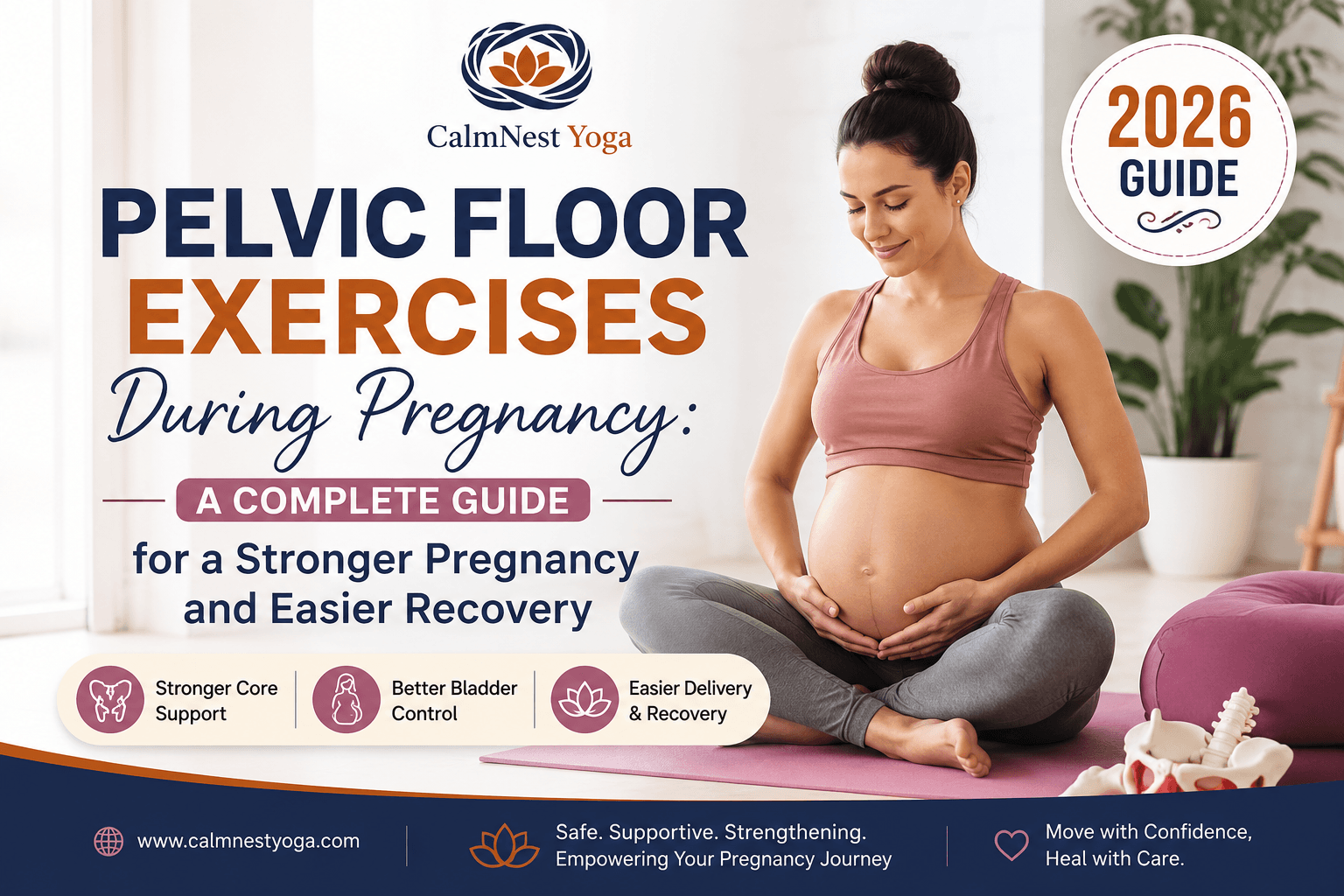
Pregnancy brings many physical changes, and one of the most important areas affected is the pelvic floor. Learning pelvic floor exercises pregnancy can help support your growing baby, improve bladder control, reduce pelvic discomfort, and prepare your body for labor and postpartum recovery. The key is to perform these exercises correctly—not just to strengthen the muscles, but also to learn how to relax them when needed.
If you're looking for expert guidance, online prenatal yoga sessions with qualified instructors can help you safely combine pelvic floor training, breathing techniques, and pregnancy-friendly movements.
What Are Pelvic Floor Muscles?
The pelvic floor is a group of muscles and connective tissues that form a supportive layer at the bottom of the pelvis. These muscles support the bladder, uterus, and bowel while helping control bladder and bowel function.
During pregnancy, the growing baby, hormonal changes, and increased pressure place extra demands on these muscles. That's why keeping them healthy is an important part of prenatal care.
How the Pelvic Floor Changes During Pregnancy
First Trimester
Hormonal changes begin to soften ligaments and connective tissues. This is the best time to learn proper pelvic floor activation with gentle contractions and relaxed breathing.
Second Trimester
As the baby grows, more pressure is placed on the pelvic floor. Some women may notice urine leakage when coughing or laughing. Building muscle endurance and maintaining good posture become more important during this stage.
Third Trimester
The pelvic floor carries its greatest load in the final months of pregnancy. While strengthening remains helpful, learning to relax these muscles is equally important as your body prepares for childbirth.
Benefits of Pelvic Floor Exercises
Regular pelvic floor training during pregnancy may help:
- Support the growing uterus
- Improve bladder control
- Reduce urine leakage
- Improve posture and core stability
- Increase body awareness
- Support postpartum recovery
- Prepare the body for labor
Remember, consistency matters more than doing many repetitions.
How to Perform Pelvic Floor Exercises Safely
Follow these simple steps:
- Sit comfortably or lie on your side if advised by your healthcare provider.
- Take a slow breath in.
- As you breathe out, gently lift the muscles around the vagina and anus, as if stopping the flow of urine and preventing passing gas.
- Hold the contraction for 3–5 seconds while breathing normally.
- Relax completely for the same amount of time.
Repeat 8–10 times.
You can also perform 10 quick contractions by gently squeezing and relaxing the muscles for one second each.
Never hold your breath or tighten your buttocks, thighs, or stomach excessively.
Pelvic Floor Exercises vs. Kegel Exercises
Many people use these terms interchangeably, but there is a slight difference.
Kegel exercises usually refer to repeated squeezing and relaxing of the pelvic floor muscles.
Pelvic floor training is a broader approach that includes:
- Correct muscle activation
- Relaxation techniques
- Breathing coordination
- Functional movement
- Posture awareness
For pregnancy, balanced pelvic floor training is often more beneficial than simply performing repeated contractions.
Why Breathing Matters
Your diaphragm and pelvic floor work together every time you breathe.
As you inhale, the diaphragm moves downward and the pelvic floor gently lengthens.
As you exhale, the diaphragm rises and the pelvic floor naturally lifts.
Practicing diaphragmatic breathing alongside pelvic floor exercises helps improve coordination, reduces unnecessary muscle tension, and encourages healthy movement patterns during pregnancy.
Common Mistakes to Avoid
Avoid these common errors:
- Holding your breath
- Tightening the buttocks instead of the pelvic floor
- Squeezing the inner thighs
- Pulling the stomach in too forcefully
- Exercising while urinating
- Skipping the relaxation phase after each contraction
- Doing too many repetitions with poor technique
Proper relaxation is just as important as strengthening.
When Should You Avoid Pelvic Floor Exercises?
Although these exercises are safe for many pregnancies, speak with your healthcare provider before starting if you have:
- Vaginal bleeding
- Placenta-related complications
- Cervical insufficiency
- Persistent pelvic pain
- A high-risk pregnancy
- Medical advice to avoid exercise
If you feel pain or discomfort while exercising, stop and seek professional guidance.
Support Your Pelvic Floor with Prenatal Yoga
Pelvic floor health is only one part of a healthy pregnancy. Gentle prenatal yoga classes can also improve posture, breathing, flexibility, relaxation, and body awareness while complementing pelvic floor training.
Learn more about our pregnancy wellness programs:
- Prenatal Yoga Classes: https://calmnestyoga.com/prenatal-yoga-classes
- Home: https://calmnestyoga.com/
- Contact: https://calmnestyoga.com/#contact
You may also find these pregnancy resources helpful:
- Pregnancy Yoga for Stress Relief: https://calmnestyoga.com/blogs/pregnancy-yoga-stress-relief
- Prenatal Yoga for Sleep: https://calmnestyoga.com/blogs/prenatal-yoga-for-sleep
- Pregnancy Yoga for Normal Delivery: https://calmnestyoga.com/blogs/pregnancy-yoga-normal-delivery
- When Should We Start Pregnancy Yoga? https://calmnestyoga.com/blogs/when-should-we-start-pregnancy-yoga-a-complete-guide-for-expecting-mothers
- Online Prenatal Yoga Classes for Beginners in India: https://calmnestyoga.com/blogs/online-prenatal-yoga-classes-for-beginners-india-a-complete-guide-for-expecting-mothers
- Mudras for Pregnancy and Birth: https://calmnestyoga.com/blogs/blogsmudras-pregnancy-birth
- Yoga for Nausea Relief During Pregnancy: https://calmnestyoga.com/blogs/nausea-in-pregnancy-relief-yoga
What Research Says
Health organizations such as the American College of Obstetricians and Gynecologists (ACOG), the NHS, and the World Health Organization support appropriate physical activity during pregnancy. Research also suggests that pelvic floor muscle training may help reduce urinary incontinence during pregnancy and after childbirth when performed correctly under appropriate guidance.
Useful resources:
- https://www.acog.org/womens-health
- https://www.nhs.uk
- https://www.who.int
- https://www.ncbi.nlm.nih.gov
- https://www.pregnancybirthbaby.org.au
Conclusion
Healthy pelvic floor muscles play an important role throughout pregnancy by supporting the growing baby, improving bladder control, enhancing core stability, and preparing the body for childbirth and recovery. The goal isn't simply to make these muscles stronger—it is to help them work efficiently by improving both strength and relaxation.
With regular practice, proper breathing, and guidance from qualified professionals when needed, pelvic floor exercises can become a valuable part of your pregnancy wellness routine.
Learn more about our pregnancy wellness programs:
- Prenatal Yoga Classes: https://calmnestyoga.com/prenatal-yoga-classes
- Home: https://calmnestyoga.com/
- Contact: https://calmnestyoga.com/#contact